Joseph Everett Grgic — product designer and UX researcher
Data-driven product designfrom research to delivery.
Fourteen years across Google, Meta, McDonald’s, Verizon and Allstate — payments, ordering, ads tooling, seller platforms, AI integration. The user, the problem space, the business objectives: when those are clear, the best design becomes obvious.
Studiovraifactors
Founder · Full-stack product design · Human factors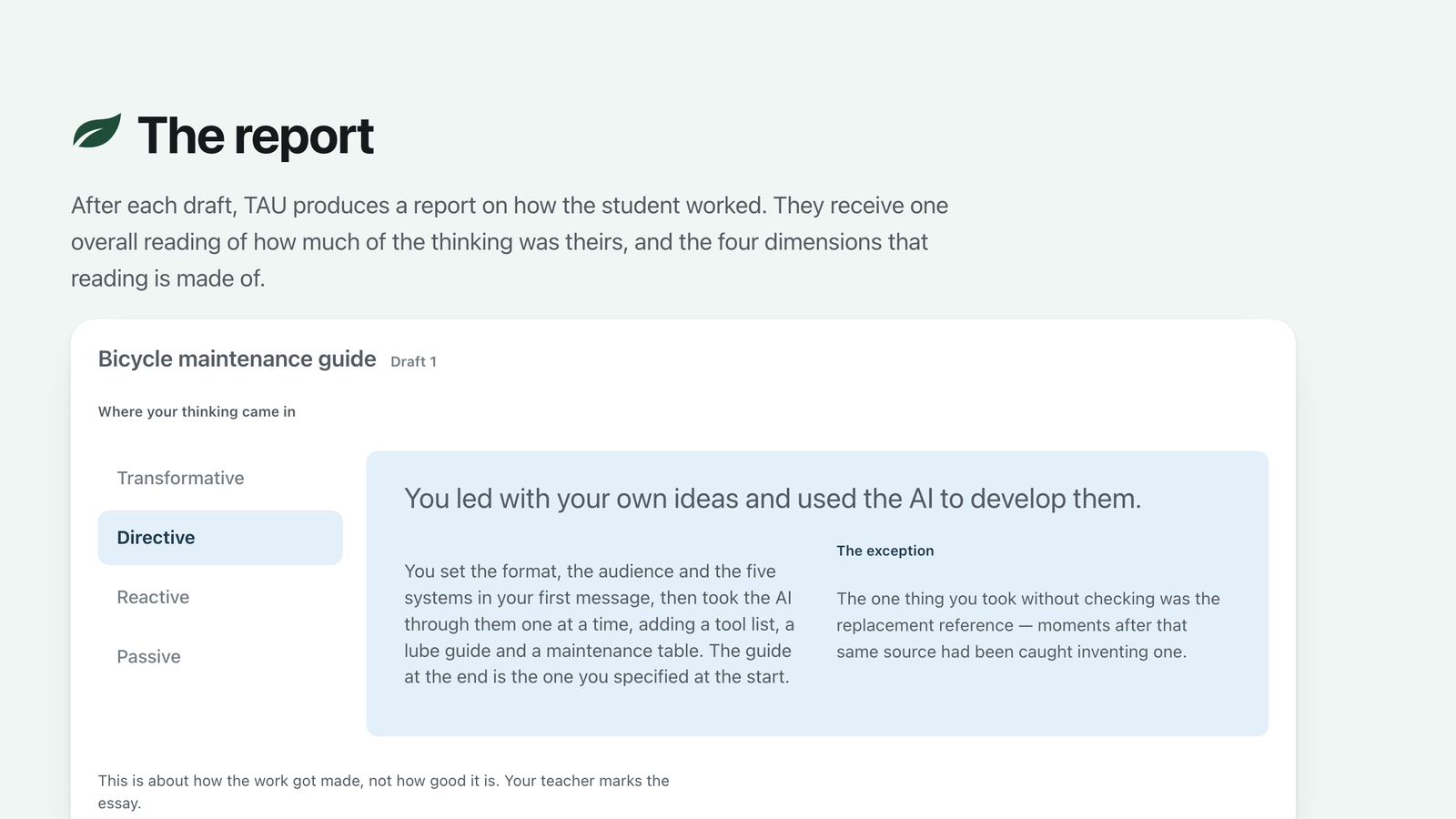
TAU Thinking
Designed and built end to end. Researched NLP transcript analysis and the literature on user agency, then translated both into something a teacher could act on: turn-by-turn analysis that reports how a student worked with the AI as evidence they can check, not a single score.
VraiFrench
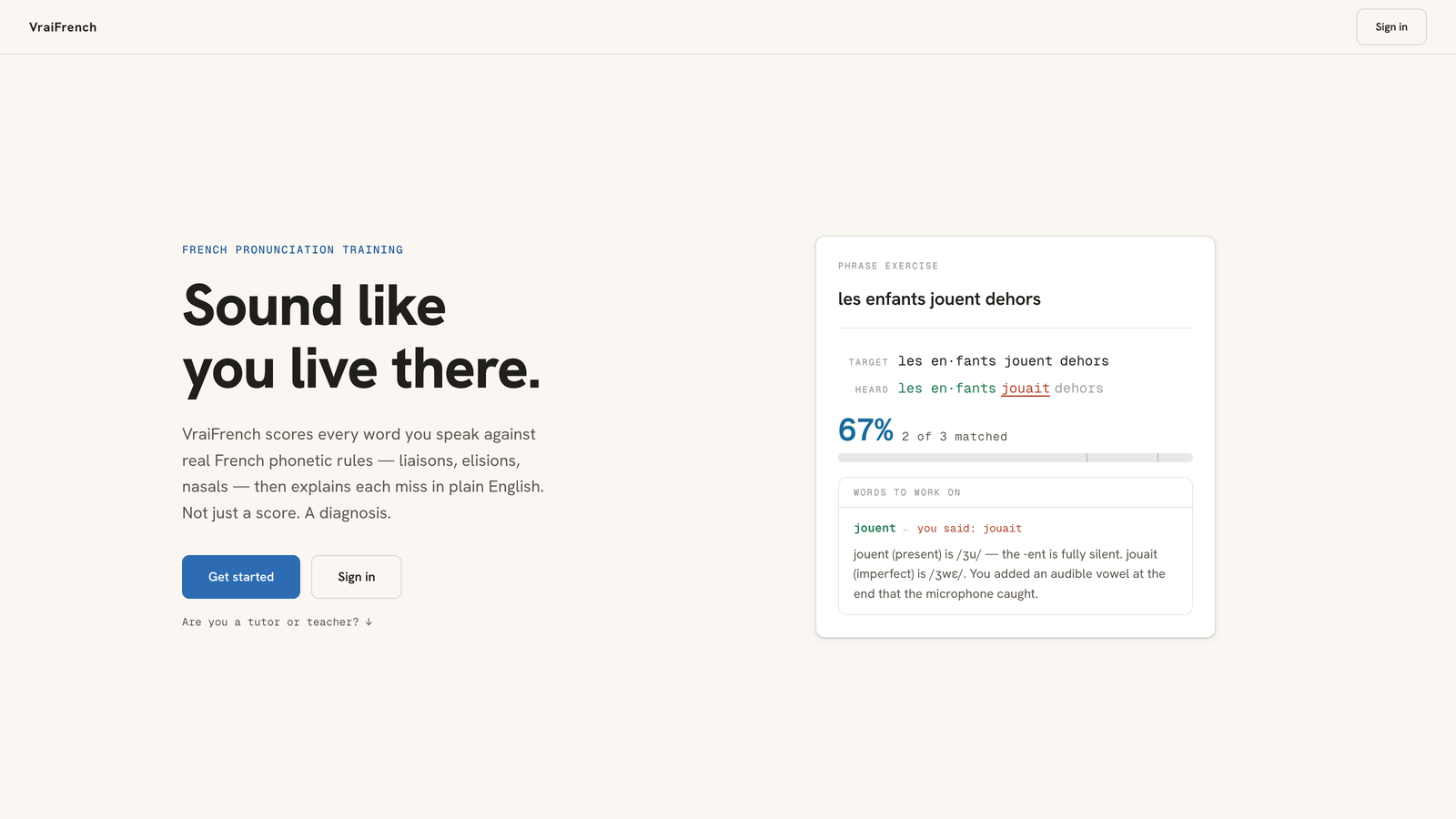
Sole designer and developer. The problem: how to speak, listen and score pronunciation accurately enough to actually improve acquisition. Grounded in French phonetics and second-language research, the stack scores speech word by word — liaisons, elisions, nasals — and explains every miss in plain English.
Product Design &Strategy
Service blueprinting · Iterative prototyping
Apple / Google Pay Integration
Led third-party wallet payment integration using behavioral economics principles. Ensured smooth adoption while protecting transaction trust signals.
92% transaction success · 85% user confidence (6/7) · 50% less steps · 25% expected time reduction · <3 months MVP

Account-Based Ordering
Defined how an account could work inside McDonald's existing Global Mobile App and the restaurant ecosystem around it — then proved the concept in a live drive-thru, within legal, technical and physical constraints.
9 months · Lead UXD + UXR · Validated in live drive-thru testing

Carrier Switch Flow Optimization
Audited the existing carrier switch flow for efficiency gaps, then redesigned it in close collaboration with legal teams to balance conversion goals with regulatory viability — reducing unique pages by 66%.
–66% pages · higher conversion
vraiFrench
Designed and built a French pronunciation tutor that scores speech word by word, then spent five months making that scoring trustworthy enough for learners and their teacher.
1-week proof of concept · 5 months to production · 1 teacher, ~10 students
UX Research &Behavioral Insights
Moderated testing · Cognitive walkthroughs · Benchmarking
SFI Email Capture Adoption
Identified seller hesitations via moderated testing to improve email capture adoption. Insights drove feature adoption improvements

Commerce Manager Usability Benchmark
Findability flagged as top issue for 52% of sellers via unmoderated testing. Prioritized IA/UI redesign to improve task completion and seller spend

Hedwig Notification Framework
Google Ads had no shared rules for what deserved an advertiser's attention. Ran a 2-day cross-functional workshop, then validated the resulting P0–P2 framework with 7 advertisers spending $3k–$1M a month. Framework validated and specced, ready for implementation
Information Architecture &Complex Tooling
Expert-user systems · Cognitive load reduction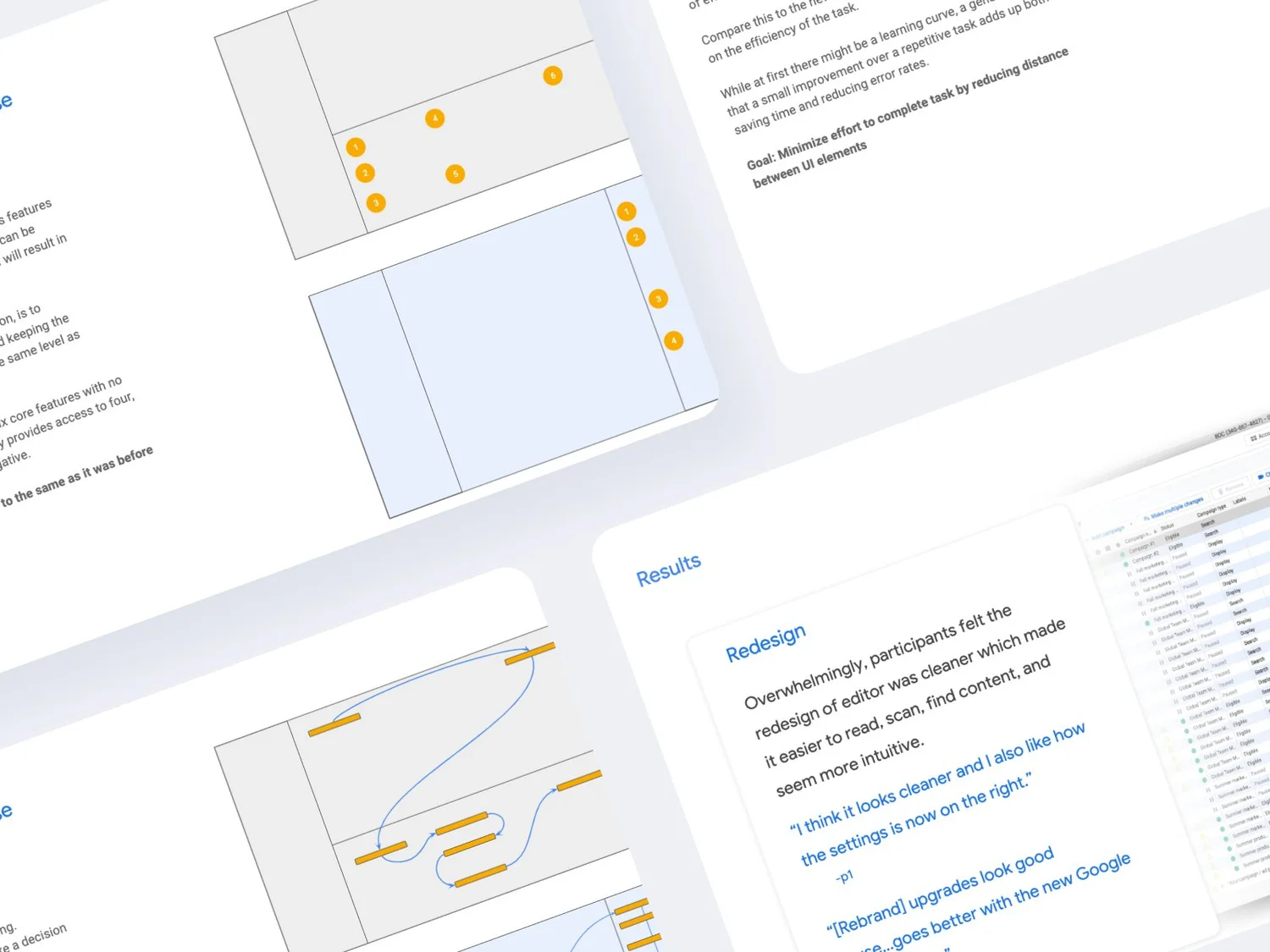
Editor Ads Tool Redesign
Worked out how to bring a tool with years of accumulated usability debt onto the M2 design system without breaking the muscle memory power users had built around its quirks — heuristic analysis, client workshops, then testing before handoff.
Lead UXD + Researcher · Heuristic analysis · Validated pre-handoff

Self-Service Data Visualization
Enterprise healthcare data had no human-readable layer — every request went through an analyst and took days. Led the UX to work out whether business users could navigate it themselves, from concept to proof-of-concept.
~10 months · UX Lead · IA framework, two directions, working POC
Writing on AI, Design &Human Factors
View all ↗AI & Agentic Systems
Apr 2026The Efficiency Metric: Why AI Should Be Measured by Human Decision-Making
AI should help people make better decisions faster, not make decisions for them. Two DOGE projects show the difference.
The Agentic Architecture: Keeping People in Control of AI That Acts
When AI acts on people's behalf, the question becomes whether they know what it is doing and how to step in.
Human Factors & Cognition
Oct 2026Designing for Calibrated Skepticism: A Human Factors Perspective on AI Reliance
AI's most persuasive cues about its own reliability are its least valid ones, so design for skepticism, not trust.
AI in Qualitative UX Research: Fewer Compromises, Not Fewer Researchers
AI can increase the velocity, breadth and depth of research findings. Sound methodology turns that into impact.
The Decline of User Agency: When AI Is Built to Do the Thinking
Why AI products drift toward agreeable, effortless answers, and how to design for the thinking users still need to do.